




The problem with SEO tools in 2026 isn’t that there are plenty of them. In fact, there are probably too many. The real challenge isn’t finding a tool. It is finding the right data, from the right tool, and knowing what to do with it.
For businesses in the UAE, that matters even more. Whether you are running a Dubai-based real estate company, an e-commerce brand, a restaurant, a professional service, or a growing B2B business, you are competing for searches that can directly influence inquiries and sales.
So, instead of throwing a giant list of SEO software at you, let’s look at the tools that are actually useful, and where each one fits.
What Should an SEO Tool Actually Do?
At the simplest level, an SEO tool should help you answer a question.
- What are people searching for?
- Why is my competitor ranking and I am not?
- What is wrong with my website?
- Which pages are bringing traffic?
- Are people clicking but leaving?
- Is all this traffic turning into business?
That’s what makes a tool useful. Not the number of dashboards it has.
- Google Search Console: Start With What Google Already Knows
Before paying for an expensive SEO platform, open Google Search Console. Seriously.
It gives you a direct look at how your website is performing in Google Search. You can see the queries bringing impressions and clicks, the pages appearing in search, average positions, indexing problems, and other search-related information.
One of the most useful parts is finding keywords you are already appearing for without deliberately targeting them.
Imagine you run a digital marketing agency in Dubai. You may think your important keyword is digital marketing agency Dubai. But Search Console might show that your website is also getting impressions for searches around SEO services Dubai, content marketing agency Dubai, or something much more specific.
Those unexpected queries can become your next content or optimization opportunities. And yes, Search Console is free.
- Google Analytics 4: Because Traffic Isn’t the Finish Line
A page gets 20,000 visitors. Sounds great. Then you discover almost nobody contacted you. That’s why rankings and traffic alone can be misleading.
Google Analytics 4 lets you look beyond the click. You can understand where visitors come from, which pages they interact with, how they move around your website, and, most importantly, whether organic visitors are contributing to conversions.
For a UAE business, this distinction matters.
A blog attracting 10,000 visitors who are simply looking for information may be less valuable than a service page bringing 500 visitors who are actually ready to enquire.
More traffic isn’t automatically better traffic.
- Semrush: Your Competitor’s Search Strategy, Laid Out in Front of You
Semrush is one of those platforms that can become a rabbit hole if you let it. But used properly, it is extremely useful.
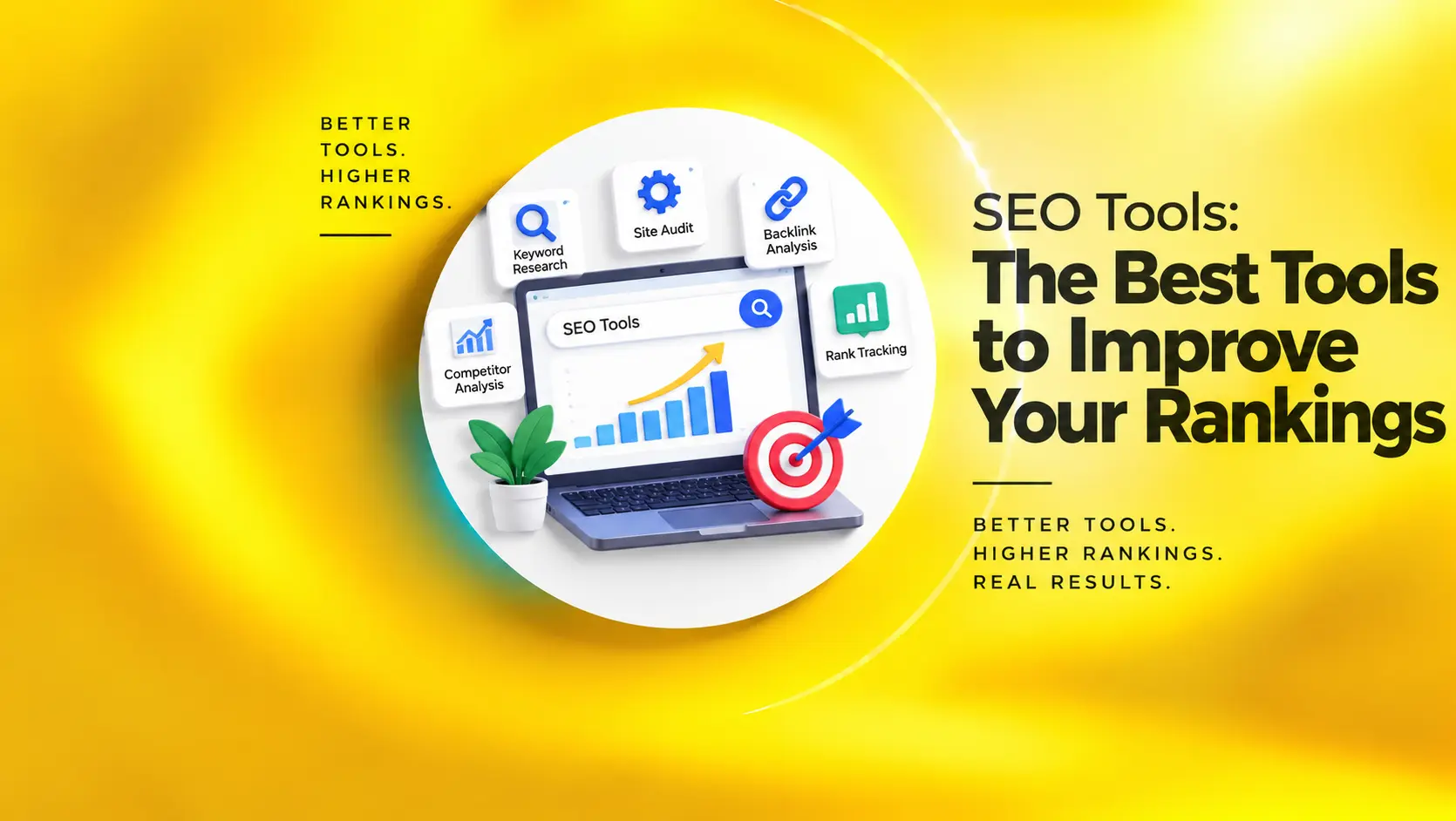
You can research keywords, track rankings, analyze competitors, audit websites, investigate backlinks, find content opportunities, and compare your organic visibility with other websites.
The competitor research is particularly valuable. Instead of asking, “What keywords should we target?”, you can start somewhere much smarter: “What keywords are already bringing our competitors traffic?”
That shift can save a lot of guesswork.
For competitive UAE industries such as property, hospitality, finance, healthcare, and professional services, that kind of competitive intelligence can be especially useful.
- Ahrefs: Go Hunting for Backlinks and Content Opportunities
Ahrefs takes a similar approach but is particularly well known for backlink and competitive analysis.
Want to know which websites are linking to a competitor? You can. Want to see which pages are attracting the most backlinks? You can. Want to investigate keyword opportunities and ranking movements?
Yep. This becomes interesting when you’re trying to build authority rather than simply publish more content.
If three competitors in your industry are repeatedly earning links from industry publications, directories, blogs, or news websites, that tells you something.
Not necessarily “copy them.” More like “There is an ecosystem here. How do we become part of it?”
- Screaming Frog: When Your Website Has More Problems Than You Thought
Sometimes your content is fine, your keywords are fine, your backlinks are fine; your website, however, is quietly falling apart.
Screaming Frog SEO Spider can crawl your website and uncover technical and on-page issues that are difficult to spot manually.
Broken links. Redirects. Missing titles. Duplicate pages. Canonical issues. Status-code problems. The boring stuff? Yes. Also the stuff that can cause very real SEO headaches.
It becomes particularly useful when you’re dealing with a large website, an e-commerce store with thousands of product URLs, a property portal with hundreds of listings, or an established company website that has accumulated years of pages.
- Google Keyword Planner: Don’t Ignore the Free Option
Keyword research does not always have to start with an expensive subscription. Google Keyword Planner can help you discover keyword ideas and understand search demand.
Let’s say you offer SEO services in Dubai.
Instead of stopping at that one phrase, you can explore related searches and variations around SEO agencies, local SEO, technical SEO, SEO consultants, industry-specific SEO, and more. But don’t fall into the “highest search volume wins” trap.
A keyword with 20,000 searches isn’t automatically better than one with 500. If those 500 people are much closer to becoming customers, the smaller number may be far more valuable.
- Google Trends: Useful When Search Behavior Moves
Some keywords are steady. Others come and go. Google Trends helps you see that difference.
It can show how interest in a topic changes over time and across locations, making it useful for seasonal campaigns, emerging topics, events, tourism-related searches, and changing consumer behavior.
For UAE businesses, this can be particularly handy when planning content around seasonal demand or fast-moving markets.
Because sometimes a keyword isn’t declining. People have simply moved on to a different way of searching.
If your website runs on WordPress, Yoast SEO can make everyday SEO management considerably easier.
It handles things such as SEO titles, meta descriptions, XML sitemaps, canonical settings, structured data, and other on-page elements.
No, installing Yoast won’t magically push your website to page one. If SEO worked like that, we’d all be ranking number one. Think of it more as a useful control panel for getting the fundamentals right while publishing and managing content.
- PageSpeed Insights: Because Nobody Likes Waiting
You click a website, it loads, and loads, and… still loads. You leave. That’s the user experience SEO teams need to think about.
PageSpeed Insights helps assess page performance and provides recommendations for improving loading speed and user experience.
It also reports Core Web Vitals, giving you a clearer picture of how pages perform from a real-user experience perspective.
For businesses competing for mobile searches, this isn’t something to shove into the “technical team will deal with it later” folder.
- Google Rich Results Test: Check What Google Can Understand
Structured data can help search engines better understand certain types of content and can make eligible pages capable of appearing with enhanced search features.
Google Rich Results Test lets you test supported structured data on your pages.
If you’re publishing products, articles, events, recipes, or other supported content types, it is a handy little tool to keep around. Not glamorous but still useful.
Which SEO Tools Do You Actually Need?
Here’s the thing. You don’t need all ten.
For many businesses, a practical setup could be:
| What you need | Tools to consider |
| Search performance | Google Search Console |
| Traffic & conversions | Google Analytics 4 |
| Keyword & competitor research | Semrush or Ahrefs |
| Technical crawling | Screaming Frog |
| Keyword ideas | Google Keyword Planner |
| Search trends | Google Trends |
| WordPress optimisation | Yoast SEO |
| Page performance | PageSpeed Insights |
| Structured data testing | Rich Results Test |
If you’re running a small business website, that may already be enough. If you’re managing a large e-commerce site or a competitive enterprise website, you’ll probably need a more advanced stack.
The point isn’t to collect subscriptions. It’s to build a system.
How to Use SEO Tools Without Drowning in Data
This is where many SEO campaigns go sideways.
Someone runs an audit; it produces 847 issues, so everyone panics. Three months later, nothing has changed. Don’t do that.
Start with the business objective. Then work backward.
Looking for new customers? Find high-intent search opportunities. Already getting impressions? Look for pages sitting just outside the top results. Traffic is growing, but leads aren’t? Investigate landing pages and conversion paths.
Are competitors consistently outranking you? Study their content, authority, and technical foundations. The website has hundreds of pages? Crawl it and deal with the problems that can actually affect performance.
SEO data becomes useful when it leads to a decision. Otherwise, it’s just a very attractive spreadsheet.
Final Thoughts
SEO tools in 2026 are smarter, more detailed, and more capable than ever. But here’s the slightly uncomfortable truth… A better tool won’t fix a bad SEO strategy.
You can have Semrush, Ahrefs, Screaming Frog, Analytics, Search Console, and every other platform open on your screen. If you don’t know which opportunities matter to your business, you’re still guessing, just with better-looking charts.
For UAE businesses, the goal should be simple: understand how your audience searches, identify where competitors are winning, fix what is holding your website back, and connect organic visibility to actual business results.
That is where SEO stops being a monthly ranking report and starts becoming a growth channel.
If you want to turn all that search data into a strategy built around visibility, qualified traffic, and measurable growth, Xparro can help you build an SEO approach tailored to your business and market.
FAQs
- Do I really need 10 different SEO tools?
Honestly? No. Most businesses can do a lot with a small set of tools. Pick the ones that help you understand your traffic, keywords, competitors, and website issues instead of paying for features you’ll never use.
- Which SEO tool should I start with?
Start with Google Search Console. It’s free, comes straight from Google, and shows you what people are actually searching to find your website. From there, you can bring in tools like Semrush or Ahrefs when you need deeper research.
- Will these SEO tools get my website to the first page of Google?
If only it were that easy! SEO tools don’t improve rankings by themselves. They show you what’s working, what’s broken, and where the opportunities are; what you do with that information is what makes the difference.