




Provided that your Google Ads campaigns are achieving impressions but no unforeseeable income, the issue is not traffic – it is strategy. The intensely competitive environment of the Dubai search engine optimization (PPC) market is characterized by companies competing with international brands, local market leaders, and start-ups with substantial budgets and rapid growth. Clicks are expensive. Attention spans are short. The narrowness of the conversion windows.
To compete in this environment, PPC needs to be developed accurately, not rolled out in the dark. We are the designers of Google Ads systems at Xparro, designed to deliver a measurable increase in ad spending, scalable growth architecture, and long-term profitability in the UAE.
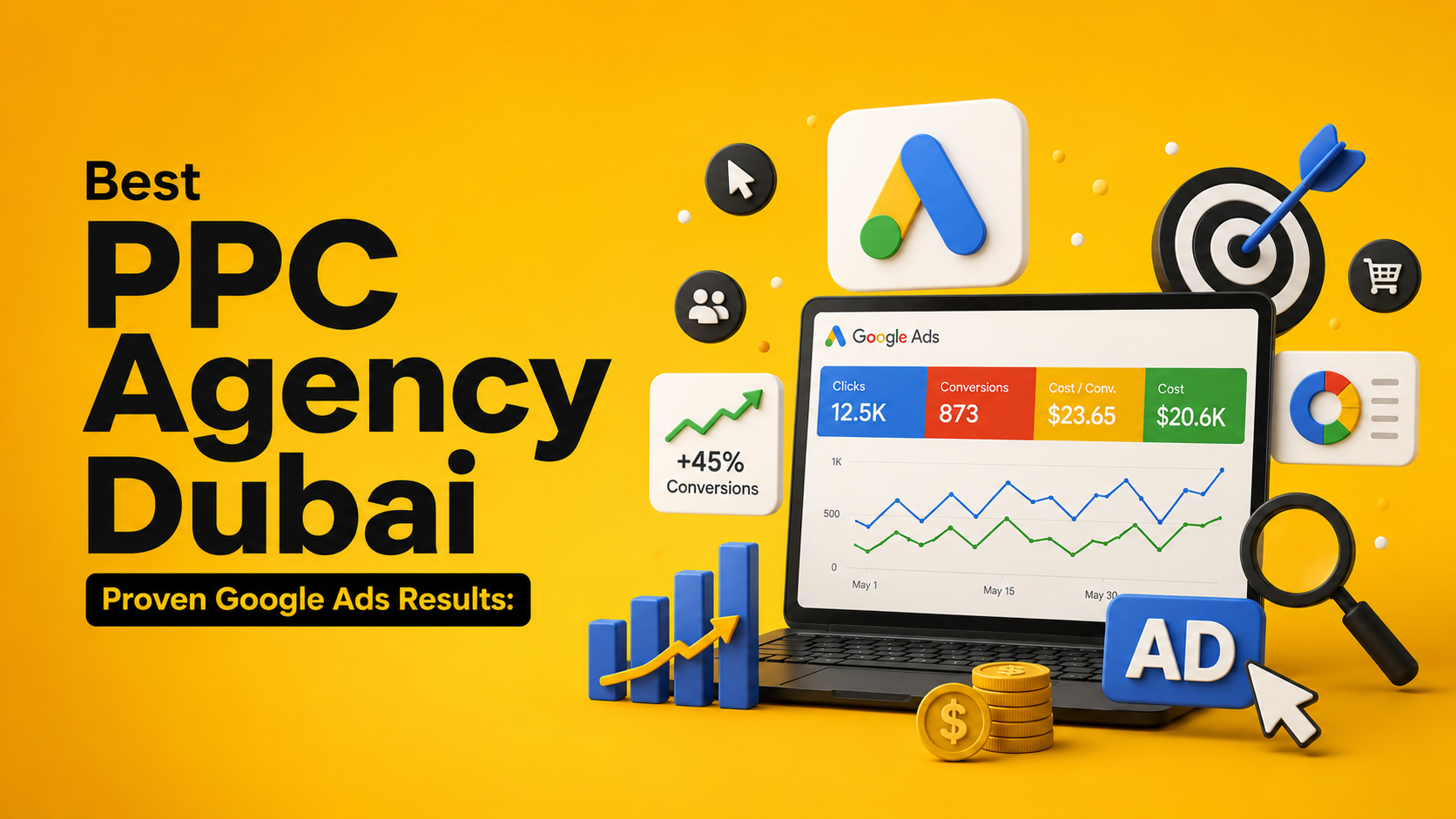
In Dubai’s highly competitive online environment, paid advertising is no longer just about visibility. It is about accuracy, speed, and return on advertising. As a performance-based PPC marketing agency in Dubai, Xparro develops customized Google Ads campaigns that are strategically built to drive conversions, grow exponentially, and sustain long-term growth across the UAE.
Dubai business is multi-lingual, multi-national, and high-intent, which is why PPC is one of the most efficient acquisition methods when combined with regional insight and professionalism. We do not simply deal with bidding keywords and publishing ads; we make it count.
The future of PPC Advertising in Dubai in 2026
The PPC ecosystem in Dubai in 2026 is among the most competitive in MENA. The price-per-click in the high-value market sectors, including real estate, healthcare, fintech, education, and legal services, is growing year after year. The influx of foreign and regional brands into the UAE market intensifies pressure on auctions. This implies that businesses do not have to compete only with a few local competitors, but also with rich global firms with bidding systems and huge budgets.
Inefficiency is costly in this setting, and it should be avoided at all costs. Poor campaign structure, targeting broad keywords, and a misaligned landing page may lead to budget loss within several days. PPC reveals weaknesses instantly, unlike organic channels, which develop over time.
The buyer behavior in Dubai has also become more mature. Consumers are thorough researchers who compare and demand that what they find is immediately relevant to them. Copywriting genericity is fatal. Irrelevant messaging leads to poor click-through rates, lower Quality Scores, and, consequently, higher costs.
Also, Dubai’s multinational demographic base makes it more complicated. There is a difference in the search patterns of Arabic and English users. Location modifiers such as ‘near me,’ ‘Dubai Marina,’ or ‘Downtown Dubai’ have a significant impact on intent. Mobile-first behavior prevails, particularly the service-based search.
To be victorious in the Dubai PPC market, it is important to have sharp targeting, smart bidding, funnel building, and continuous optimization. Less than that will be a financial liability.
The Importance of PPC in Dubai
Dubai is one of the most digitally vibrant business centers in the world. Customers are intentional searchers, comparative, and demand immediate relevance. PPC advertising allows brands to appear exactly at the moment a buying decision is forming.
Google Ads offers instant exposure to the Search, Display, YouTube, and Shopping networks, unlike organic channels, which require time to mature. It is essential for businesses in Dubai that operate in the real estate, healthcare, financial, e-commerce, hospitality, and professional services sectors.
At Xparro, PPC is used as a revenue generator, not as a traffic channel. Any campaign is designed to align with conversion economics that support business goals, margins, and customer lifetime value.
The reason why most PPC Campaigns fail in Dubai
Most businesses join Google Ads with a lot of zeal but in an unorganized manner. The most prevalent failure is focusing on clicks over conversions. Traffic is not revenue-generating. In the absence of conversion alignment, the campaigns are being used as cost centers, not as profit drivers.
Broad match keywords that aren’t controlled by negative keywords often attract irrelevant traffic. For example, a real estate developer focused on the desired luxury apartments in Dubai might appeal to a renter, job seeker, or researcher. Spend leakage occurs daily without persistent negative keyword refinement.
Another prevalent problem is paid traffic being sent to generic home pages. If the ad messaging offers a specific service, the landing page should be tailored to it. The misalignment increases bounce rates and lowers Quality Score.
Incidentally, audience segmentation is also disregarded. The demographic diversity of Dubai requires stratified targeting based on nationality, income level, degree of intent, and device usage. A universal solution decreases the predictability of performance.
Lastly, most campaigns do not track financials. Optimization decisions are made using incomplete data without conversion tracking, CRM integration, and revenue attribution.
These inefficiencies multiply rapidly in a high-end CPC environment such as Dubai. Organized responsibility is what will help distinguish between scalable PPC systems and experiments with short-term objectives.
UAE PPC Performance Anonymized Accounts
The examples presented below represent combined performance results from anonymized PPC campaigns in the UAE, operated across various industries. Confidentiality: Client names and proprietary information are not disclosed.
Real Estate Industry- Best Quality Optimization.
Challenge:
One of the Dubai-based property developers was getting a lot of lead volume but low qualification. Paid traffic was rising, but conversion-to-site-visit ratios were inconsistent.
Strategic Focus:
We reorganized the account by separating high-intent transactional keywords and informational queries. Targeting was narrowed down to high-demand zones. Conversion tracking was also improved to separate serious buyer inquiries from general interest forms.
Outcome:
Lead quality improved, cost inefficiencies were reduced, and the ratio of marketing expenditure to qualified inquiries improved measurably. Over time, the reliance on paid media declined as efficiency increased.
Healthcare Industry- Reviews and Conversion Alignment
Challenge:
One of the UAE healthcare providers had a policy restriction that limited the flexibility to convey ad messages. The click-through rates were low, and conversion tracking was not in-depth.
Strategic Focus:
Segmentation by keyword intent was introduced, and treatment-specific search queries were given greater importance. The ads’ messaging focused on trust indicators, certifications, and appointment clarity. The landing pages have been redesigned to reduce friction and improve mobile friendliness.
Outcome:
The campaign achieved long-term CTR growth, reduced acquisition costs, and high booking conversion rates, and was fully compliant with advertising regulations.
E-Commerce Brand- Scaling Revenue by Intelligent Structuring.
Challenge:
A Dubai-based e-commerce retailer experienced low ROAS and high cart abandonment on paid traffic.
Strategic Focus:
We have maximized the relevance of the product feed, implemented dynamic remarketing campaigns, and stacked audiences by purchase behavior. The shopping campaigns were reorganized to be efficient in bid and product segmentation.
Outcome:
Paid campaign revenue became more predictable, cart abandonment was reduced through organized retargeting, and profit on ad spend increased steadily from one optimization cycle to the next.
What These Cases Show
Throughout industries, one trend is the same:
Intent mapping is structured to enhance traffic quality.
Profitability improves with conversion-oriented landing pages.
Optimization that is supported by data minimizes wasteful expenditure.
The scaling is stabilized by constant improvement.
PPC in Dubai does not happen by chance. It is designed by discipline, market-specific targeting, and financial responsibility.
What makes our PPC Strategy Different
Generic structures and duplicated playbooks are the primary cause of failure of most PPC campaigns. The Dubai market is not responsive to global templates. Consumer behavior differs considerably by nationality, language, device usage, and urgency to purchase, so Xparro creates campaigns specifically tailored to the Dubai audience.
The Google Ads strategy is differentiated at each level. Our initial step is a thorough market segmentation, dividing audiences by intent, demographics, location, and commercial readiness. This ensures that ad spend is allocated only where demand has been proven.
Our campaign’s architecture is scaled. Ad groups are closely themed, the intent of keyword mapping is clearly conveyed, and Quality Score optimization is prioritized in the first stage. This will enable our customers to win auctions at lower costs while keeping high ad placements.
Complete Funnel Google Ads Architecture
Successful Google Ads accounts are built as funnels, not campaigns.
Top-of-funnel campaigns help build brand awareness and gather information about the audience. These ads are based on awareness, based on YouTube, Display, or a larger Search query. They do not aim for direct conversion but for creating an audience pool.
Middle funnel campaigns foster involvement. The retargeting is aimed at users who have used the product before, with more value propositions, testimonials, and service differentiation. This level develops credibility and acquaintance.
Bottom-funnel campaigns target high-intent users on transactional keywords. The bidding strategies are more aggressive due to the higher conversion probability.
This organized overlay helps track conversions and stabilize scaling. Full-funnel architecture enhances lifetime value and hedges against auction volatility, rather than relying solely on bottom-funnel campaigns.
Advanced Keyword and Intent Mapping
Effective PPC requires understanding search intent rather than search volume. We categorize keywords into transactional, commercial, navigational, and research-driven clusters. This would enable us to regulate bidding aggression depending on the conversion probability.
In Dubai, search behaviors often include service urgency, location modifiers, and brand comparison. We use these trends to inform our keyword choices to attract high-intent traffic, which is more likely to convert.
The negative keyword strategy is important, as is any other keyword strategy. The continuous filtering of irrelevant queries minimizes wasteful spending and enhances the campaign’s efficiency in the long run. This refinement process is ongoing and data-driven.
High-Performance Ad Copy Built for the UAE Audiences
The ad copy is decisive in the click-through rates and Quality Score. Our copy in Google Ads is cultural, clear, and compliant. We focus on value propositions that resonate with Dubai’s diverse audiences.
We do not use generic promotion wording but rather focus on the trust indicators, service distinction, time to service, certification, and local relevance. Ad extensions such as callouts, structured snippets, location extensions, and call extensions are fully utilized to dominate SERP real estate.
Every ad version is being tested. Performance data determines the winners, and underperforming messages are eliminated quickly. This continuous testing framework ensures sustained improvement.
Conversion-focused Landing Page Optimization
Traffic in itself does not provide ROI. Most PPC campaigns fall short in conversion architecture. Xparro collaborates with its clients to create landing pages that optimize paid traffic.
Landing pages are fast, clear, and action-oriented. We remove distractions, match our messaging with ad intent, and position conversion triggers. Mobile responsiveness should be a requirement, especially in Dubai, where mobile search prevails.
We monitor all meaningful interactions, including form submissions, calls, WhatsApp clicks, and lead quality indicators. This information is feedback for bidding and targeting decisions and for completing the performance loop.
PPC Conversion Rate Optimization
It is not just a half-word on driving traffic. Profitability varies with traffic efficiency
.
We are analyzing heatmaps to identify friction points. Scroll tracking shows where users lose interest. There are drop-offs seen in form-field analysis. These understandings influence micro-corrective actions that are critical to performance.
Minor increases in conversion rates have significant financial implications. An example is when a landing page conversion rate of 5% is increased to 7%, reducing the cost of effective acquisition without necessarily increasing the budget.
CRO secures margins in a high-CPC environment in Dubai. Rather than spending more money to get more traffic, we get the traffic we have and better utilize it to improve efficiency.
CRO changes PPC to revenue maximization.
Smart Bidding and Budget Management
Automated bidding is effective when it is properly applied. We leverage Google’s smart bidding models, such as Target CPA, Target ROAS, and Maximize Conversions, once we have sufficient data to support them.
Budgets are dynamically shared across campaigns based on performance indicators. High-performing segments are invested in more, while poor-performing areas are throttled or held back. This ensures the efficient deployment of capital at any given time.
For enterprise and high-spend accounts, we use bid layering, device adjustments, location-based modifiers, and time-of-day optimization to identify optimal conversion windows.
AI & Automation in Modern PPC
AI has revolutionized the bidding strategy and performance forecasting.
When conversion statistics are sufficient, we optimize using smart bidding models, including Target CPA and Target ROAS. Predictive algorithms adjust bids in real time based on device signals, location, time of day, and user behavior.
Automation is dangerous, though. AI works best with a well-organized intent mapping, correct tracking, and conversion objectives. Automation helps increase efficiency, whereas profitability is ensured by strategic oversight.
Transparent Reporting and Performance Accountability
Lack of clarity is one of the greatest problems businesses face when engaging PPC agencies, so at Xparro, transparency is a core value. Customers are provided with understandable, actionable reports on business outcomes, and not vanity metrics.
We follow key metrics like cost per acquisition, conversion rate, impression share, Quality Score, and return on ad spend. Reports are contextualized with insights, not just numbers.
Regular performance reviews allow us to adjust strategy proactively. Our clients are well informed on where their budget is going and what it is generating.
How We Measure PPC ROI
Impressions and clicks do not accurately reflect PPC performance.
We combine Google Ads with GA4 and the CRM system in order to monitor revenue attribution. Micro-conversions such as calls, WhatsApp clicks, and form submissions are monitored alongside macro-conversions, such as sales or booked consultations.
Multi-touch attribution recognizes the contributions of different campaigns across longer purchasing cycles. First-Click Interactions: B2B and real estate, in particular, may be helpful in driving final conversions several weeks later.
We evaluate
- Cost per acquisition
- Conversion rate
- Return on ad spend
- Revenue contribution
- Impact of customer lifetime value
Profit generation ultimately determines PPC performance.
Industry-specific PPC Expertise
Dubai’s economy is diversified across a variety of high-value industries, and each has distinctive advertising dynamics. Xparro has worked with PPC campaigns in Dubai across real estate, healthcare, education, fintech, logistics, legal services, luxury retail, and SaaS.
Every industry will demand its own unique compliance strategy, keyword strategy, and funnel design. For example, healthcare PPC must comply strictly with the ad policy, whereas real estate PPC requires hyper-local targeting and lead qualification. The sector-niche knowledge enables us to avoid costly learning processes and deliver faster results.
Google Ads as a scalable Growth Channel
Google Ads is not only a lead-generation tool but also a scalable growth system when built properly. The more data we have, the smarter, more efficient, and more predictable the campaigns are.
We develop PPC structures that scale across location, service, and language. When the right foundation is laid, expansion into new Emirates or international markets will be smooth.
Long-term clients see performance gains in terms of compounds as optimization layers accumulate over time.
Why Businesses Choose Xparro as Their PPC Agency in Dubai
Xparro is designed to suit companies that value results over rhetoric. We have integrated local market intelligence with technical expertise to deliver PPC campaigns that consistently deliver results, always within the competitive Dubai PPC market.
We do not have overnight success. We create systems that produce quantifiable, repeatable growth. Our approach to accountability, customization, and performance optimization makes us unique among generic PPC sellers.
Xparro provides Google Ads solutions that are impactful for businesses looking to convert their advertising costs into predictable income.
The Competitive Advantage of the PPC Market of Dubai.
The paid advertising climate in Dubai is only getting tougher. Costs will rise. The buyer’s expectations will increase. Those businesses that take PPC as a developed growth tool rather than a short-term strategy will prevail.
When properly developed, Google Ads becomes a reliable acquisition engine and a scalable revenue system.
At Xparro, each and every click is deliberate, each and every campaign is responsible, and each and every Dirham is maximized to be returned.